
Energy Upgrade Options
Airtightness and Ventillation
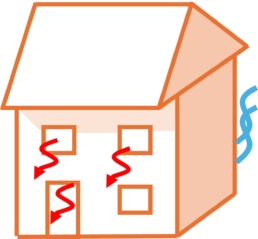
Draughtproofing and Airtightness
Our air testing showed that many homes have leakage rates that result in 15–25% of their heat being lost through draughts and uncontrolled ventilation. By sealing gaps and cracks and improving airtightness, overall heat loss can be reduced, helping to keep homes warmer and more comfortable.
Improvements are low-cost and widely applicable, but should always be paired with effective ventilation to maintain indoor air quality.
When to consider:
-
Older properties with obvious gaps, cracks, or draughts
-
Homes undergoing insulation upgrades
-
Properties where energy use appears high for their size
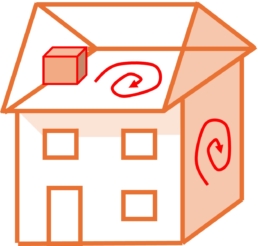
Ventilation Systems
We found that as insulation and airtightness are improved, effective ventilation becomes essential. Without it, there is a risk of condensation and poor air quality. Mechanical ventilation with heat recovery (MVHR) can recover up to 80–90% of the heat from outgoing air while supplying fresh air. This both protects the building fabric and keeps residents comfortable.
This is generally suited to well-insulated, airtight homes or major retrofit projects, and may not be appropriate for all property types.
When to consider:
-
Homes with high levels of insulation and airtightness
-
Properties prone to damp or condensation
-
Buildings where indoor air quality is a key concern